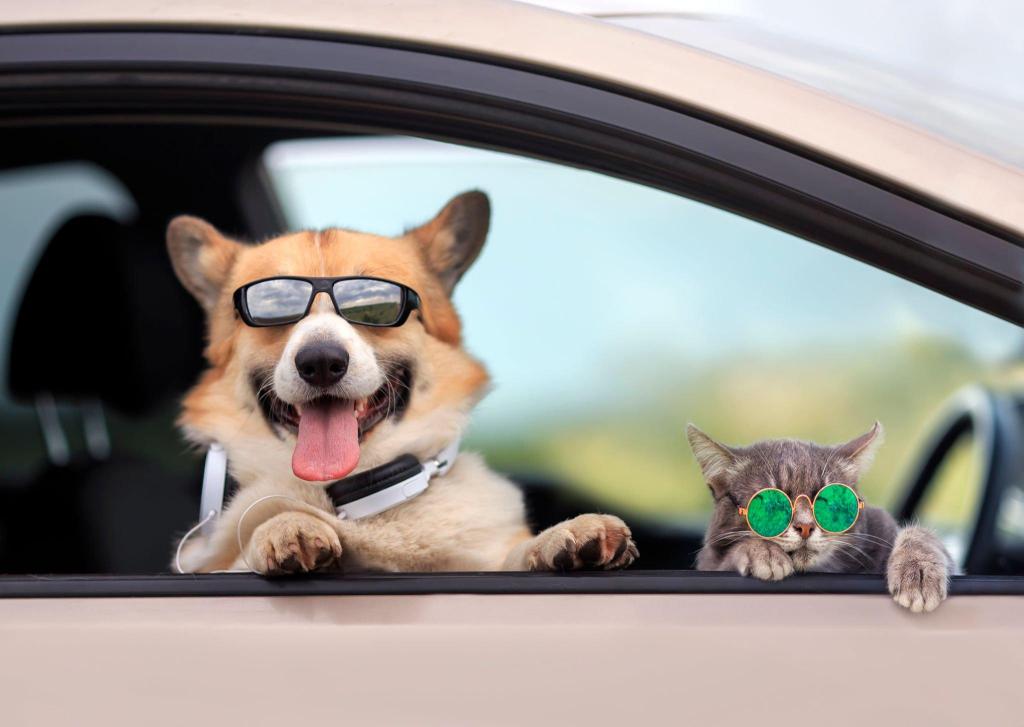
How to Prepare for a Road Trip With Cats and Dogs

iStock

If you have a furry friend, you want to take them everywhere with you, including on road trips. But how do you travel over long distances with a cat or dog (or both or several!) and have a great time? Here are the top questions to ask before you head out on your adventure.

1.   Is your pet’s personality compatible with a road trip?

Maybe your pet loves to run around in open spaces, so an extended time in the car would make them anxious. Or your pet has a cool, calm personality and loves the tranquility of a long drive. Or they have a huge personality and would bounce around the car, distracting you from driving. Ideally, you want to acclimatize your pet with short car rides, but if you’ve just adopted them, there are a few things you can do to make the road trip more comfortable:

  • Get a pet carrier or crate, especially if your pet is small in size or young in age. Your pet should be able to stand, lie down, and turn comfortably, so you can secure the crate to the car seat. It should also have room enough for a few pet toys to keep them happy.
  • For larger pets, put a mesh divider or barrier between your front and back seats to keep them from rushing forward while you drive. For dogs particularly, you can buy a canine seatbelt to buckle them in during your journey.
  • Get your pet’s favorite toys and blankets in the car with you. Familiar objects can help them calm down during a road trip.

Remember that even a super well-behaved pet can get excited on a road trip and become a hazard while you drive. Secure them as best you can, then stop often to let them get some exercise.

2.   Is your pet in good health?

If your pet has a preexisting health issue or is a senior, take extra precautions while you prepare for a road trip. Take them to the vet a few days before the trip to update their vaccinations, top up their medication, and get tips on how to keep them calm on your journey. Even with pets in great health, a routine checkup is great for peace of mind.

3.   Does your pet have all their identifications?

This means their name on a collar, your contact details should they get lost, and possibly a GPS tracker on them as well. You may also need permits or vaccination certificates for certain destinations if you’re crossing state borders. Some parks may also need these details in case your pet gets off their leash or gets injured as you travel.

4.   Are you ready for frequent stops?

Road trips with pets tend to go slower than you expect because of the rest stops. Your pet will need exercise and a chance to potty, so pace your journey to accommodate their needs. Choose pet-friendly stops and always have waste bags to pick up after them.

5.   Do you have road trip-friendly bowls?

You need to keep your pet fed and hydrated during your road trip, but the food and water bowls at home might not be suitable for the journey. Find some spill-proof pet bowls and leak-proof bottles to avoid making a big mess in your car. Search online for “travel pet bowls” and “travel pet water dispensers” and see which ones best fit your furry friend.

6.   Does your road trip vehicle have good climate control?

If you have to stop for supplies or grab some takeout in no-pet places, you’ll need to leave your pet in your car for some time. Remember, cats and dogs can easily overheat or get too cold, so your vehicle needs a well-functioning AC system in case you leave them unattended, however briefly. Crack your windows open, too, and consider leaving a note on your window indicating that your pet is safe and you’ll be right back.

7.   How do you plan to keep your pets entertained on the road?

Unlike road trips with kids where you have lots of conversations and [road trip games] to play, pets will need a different kind of engagement. Look for interactive toys that dispense treats, and get a variety of their old favorites and new, fun toys to keep them occupied. Try to avoid squeaky or noisy toys because they can be really distracting when you’re driving. And go for larger toys that won’t roll under your car seats.

8.   Have you confirmed that your accommodations and attractions are pet-friendly?

Imagine arriving at your destination only to discover your furry friend isn’t allowed. Read the reviews, look at pet policies, and call ahead to find out if your hotel, motel, parks, beaches, etc., welcome pets. Some places charge additional fees for pets, while others have strict rules about leashes. A little extra research can save you from huge inconveniences.


Looking for road trip ideas? How about 100 to start you off? 100 Road Trips in the USA: An Alphabetical List of Scenic Drives, National Parks, Historic Monuments, and Incredible Attractions in America.

Out now: Order your copy today.


How to Make a Road Trip Itinerary

Unsplash

Let me start with a disclaimer: I like planning my road trips. Some of us prefer to be more spontaneous and flexible, and you can certainly enjoy this freedom if you don’t plan ahead—just pick a destination and see where the road leads you. But if you’re traveling with company or have time or money constraints, a road trip planner will make things much easier. Here’s how to make a good road trip itinerary, plus some dos and don’ts to remember.

Road Trip Itinerary in 7 Steps

Step 1: Decide your start and end points

This is a pretty basic step, but it helps you know the distance and route you’ll take on your journey. You’ll need a different itinerary for a one-way trip than a round trip. For example, if you’re relocating to a new town, city, or state, your road trip planner may have fewer attractions or stopovers for recreation because there’s a sense of urgency to arrive at your new home. A round trip, however, means you can be as leisurely as you like because you’re going back to the same place.

Step 2: Estimate the length of your trip

How much time do you have for the entire road trip? How many stops do you want to make? How long do you want to spend at each stop? You want to make the most of every moment on the road.

Step 3: Note down the attractions and accommodations

Do some research about your route and mark the scenic attractions, landmarks, restaurants, and accommodations. Categorize them into a “must-see/must-stop” list and a “would be nice” list. If you encounter any setbacks on the road, you may have to forego some stops or destinations because of time or budget constraints.

Step 4: Leave some wiggle room

Be flexible with your road trip planner in case you make changes on the journey. You may want to linger at certain destinations, follow an unbeaten path, or even participate in an event that just happens to be en route.

Step 5: Write a rough draft

Consider how far you want to drive each day, where you’d like to stop for food and supplies, where you’ll spend the night, etc., and put it down on paper. It helps to visualize your trip this way before you proceed with the next steps.

Step 6: Check your budget

Think of your draft itinerary as a wishlist; now look at it against your road trip budget. See if your finances can manage the fuel, food, accommodation, attraction fees (if any), equipment rentals (bikes, kayaks, tents, etc.), plus a contingency amount for emergencies.

Step 7: Share your road trip itinerary

There are two reasons why sharing your itinerary is a good idea. First, you can get feedback from others who have taken the same trip before. You may discover attractions or activities you may have missed, or get some useful tips to make your journey easier. Then, you want someone trustworthy to know your whereabouts before you head out. Once that’s done, you can commit to the itinerary and start thinking about what to pack and getting your vehicle ready for the trip.

Pro tips:

  • Consider using a planning app or editable template. Do a quick search on your smartphone marketplace or search engine and pick what works for you.
  • You can also find pre-made road trip itineraries if you’re planning a popular trip, like the example below.

Road Trip Itinerary Example

Here’s a basic road trip planner for a journey from San Francisco to Los Angeles, seven days along the West Coast of the USA.

Day 1: San Francisco to Napa Valley

  • 1.5-hour drive
  • Visit vineyards and wineries
  • Overnight stay at Napa River Inn

Day 2: Napa Valley to Lake Tahoe

  • 3.5-hour drive
  • Hiking and swimming in Lake Tahoe
  • Overnight stay at The Cottage Inn

Day 3: Lake Tahoe to Yosemite

  • 4.5-hour drive
  • Full day at Yosemite National Park
  • Overnight stay at Curry Village

Day 4: Yosemite to Monterey

  • 4.5-hour drive
  • Visit the Monterey Aquarium and Point Sur Lighthouse
  • Overnight stay at Victorian Inn

Day 5: Monterey to Big Sur

  • 1-hour drive
  • Visit Keyhole Rock at Pfeiffer Beach; surf at Sand Dollar Beach
  • Overnight stay at Deetjen’s Big Sur Inn

Day 6: Big Sur to Santa Barbara

  • 4-hour drive
  • Visit Lotusland Gardens and Sea Center in Stearns Wharf
  • Overnight stay at Eagle Inn

Day 7: Santa Barbara to Los Angeles

  • 2-hour drive
  • Tour Warner Bros. Studios; visit the Hollywood Wax Museum
  • Overnight stay at The Hollywood Roosevelt

You can imagine the variations and possibilities just from this simple itinerary. There are all kinds of activities and attractions on this route, not to mention accommodations for every kind of budget. You can also break the drives into shorter distances to extend the road trip by a few days and explore more local towns and experiences. Customize your itinerary as much as you wish and get the most out of your road trip.

Road Trip Itinerary Do’s and Don’ts

Do:

  • Include rest days to avoid burnout behind the wheel, especially if you’re traveling solo.
  • Use your itinerary as a packing guide, e.g., pack swimming trunks and sunscreen if your journey includes a beach, or waterproof shoes and a raincoat if you’re hiking through a rainforest.
  • Plan your itinerary more around attractions than budget and distance. You can find creative ways to save money and still visit your must-see destinations.
  • Have a backup plan. Know what to do if you find roads closed for maintenance, experience inclement weather, or other unexpected changes on the journey.

Don’t:

  • Cram too much into your road trip planner. Make your journey about enjoyment, not crossing off  a checklist.
  • Overlook essential services. You can sign up with a roadside assistance company, but also check gas stations, grocery stores, pharmacies, and emergency health services along your route as you research your trip.
  • Overlook eating time. Expect to stop for meals and refreshments, whether that’s your packed road trip snacks or a diner along the way.
  • Forget the weather forecast. Add a note to each destination marking the expected weather conditions and always anticipate changes.

Looking for road trip ideas? How about 100 to start you off? 100 Road Trips in the USA: An Alphabetical List of Scenic Drives, National Parks, Historic Monuments, and Incredible Attractions in America.

Out now: Order your copy today.

Solo Road Trips: A Beginner’s Guide 

Pexels

A solo road trip is many things: transformative, exhilarating, an opportunity for self-discovery. It’s also intimidating, daunting, and downright scary if it’s your first ever road trip. With enough preparation and awareness, your first solo road trip can be the beginning of many more adventures. This guide covers road trip essentials for solo travelers to help you plan your journey. 

1.      Choose your ideal destination 

I wrote about choosing a road trip destination in general terms, but it’s even more important when you’re traveling solo. Pick a road trip destination that you’re curious about, or offers an experience that’s worth the drive. That could be a type of landscape or a historical site, or even an annual event or festival you’ve always wanted to attend. Research the weather and road conditions, travel advisories, and other accessibility info to minimize travel risks while you journey alone. 

2.      Decide your itinerary style 

Since you’re traveling solo, you can have a loose, flexible itinerary or a detailed outline that you’ll follow to the letter. It depends on your personality and the time available for the road trip. For example, you can opt to be spontaneous about the number and duration of stops on the drive and have a relaxed journey. Or you could work through a bucket list of attractions that you don’t want to miss. Your solo road trip itinerary should represent you and your interests—there’s no one-size-fits-all here. That said, 

3.      Be spontaneous 

A solo road trip gives you complete freedom, so you can easily take detours or linger in charming places for as long as you please. Even with an itinerary, give yourself some breathing room to enjoy a more organic journey.  

4.      Get a comprehensive vehicle check-up 

You want your car in the best possible shape for your solo road trip, so schedule a thorough maintenance inspection at least a week before D-day. Get all the basic vehicle emergency tools while you’re at it: spare tires, jumper cables, a flashlight, a jack, a wrench, etc. Save the necessary roadside assistance or towing service numbers, too. It’s best to be prepared for unforeseen circumstances to help you get back on the road as quickly as possible. 

5.      Keep a personal emergency kit with you

Just as you prepare your car for repairs, equip your personal safety as well. Ensure your first-aid kit is well stocked with bandages and band-aids, pain killers, antiseptic cream, antibacterial wipes, scissors, etc. Also, refill any prescription medications before you head out on the road, and note the hospitals or clinics along your route. 

6.      Share your solo road trip plans 

Inform your close friends and family members that you’re going on a solo trip. Give them your itinerary, accommodation info, and other details. This is purely for your safety and peace of mind; your loved ones will know where to reach you, and if not, at least someone knows your whereabouts. You can check in with them during your journey to share your progress, too. 

7.      Stay alert, but avoid distractions

You’ll feel tired and drowsy when you’re driving alone. The opposite is also true: you may be alert because of all the notifications pinging on your phone. These two factors are the biggest causes of accidents and incidents on our roads. What can you do to avoid them on your solo road trip? 

  • Vary your playlist: One genre or one tempo can become monotonous, so mix up your road trip tracks. It’s the perfect chance to listen to new artists or go down memory lane. Also, save the songs offline in case you lose connectivity as you drive. 
  • Stop regularly to stretch your legs or take a power nap whenever you need it. Pull over in a safe place and do what re-energizes you. 
  • Drive defensively: Watch out for road signs, other drivers, pedestrians, and wildlife along the way. If you must answer your phone, use your car’s Bluetooth system or put the call on speakerphone. Otherwise, only reply to texts and notifications when you’ve pulled over. 

8.      Wear comfortable clothes 

Weather conditions constantly change on the road, from cool mornings to hot afternoons to sudden storms. Of course, check for weather updates before you start your road trip, but more importantly, dress comfortably for the journey. If you expect weather changes, wear layers that you can easily take off and on again. If you’re driving in the summertime, choose breathable, moisture-wicking fabrics that can handle sweat and cool you down. Pack a good variety of lightweight and heavy clothing items to be on the safe side. 

9.      Know your accommodation options 

Carrying a sleeping bag on your solo road trip is good travel sense, even if you don’t plan to use it. But if you’ll be camping or hiking, get all your outdoor gear ready before you start the journey. For indoor accommodations, book a hotel, motel, cabin, or Airbnb in advance. In either case, choose accommodations with all the amenities you need, including WiFi, safe parking, charging stations, laundry, waste disposal, etc. 

10. Practice travel etiquette 

This means dressing decently, respecting the local residents, engaging in polite conversations, and leaving a place as you found it or better, whether that’s a campsite, parking lot, hotel room, etc. Even if your solo road trip is within your state or country, each location has its own personality and culture. Familiarize yourself with these areas ahead of your trip to avoid causing unnecessary offense.

11. Trust your intuition with people and places

You’ll meet new and interesting people on your solo road trip, but be mindful that they may not all have good intentions. Always keep to public, well-lit areas when interacting with locals, and don’t divulge your itinerary or personal details. Trust your instincts if they signal that a place or person feels off. 

12. Create your road trip keepsake

How will you document your solo road trip adventure? Photos and videos are great, but so is note-taking in a journal or smartphone app. These things become your journey’s keepsakes that capture your experience. You can choose to share it on social media, start a blog, or keep it private. 

13. Enjoy the solitude 

A solo road trip is a chance to get comfortable in your own company. It’s a good way to clear your mind, appreciate nature, and boost your confidence. If you already enjoy being on your own, you’ll love the experience. Otherwise, get ready to do the introspection you’ve been avoiding for some time. The fresh perspective and clarity will be worth the trip. 


Looking for road trip ideas? How about 100 to start you off? 100 Road Trips in the USA: An Alphabetical List of Scenic Drives, National Parks, Historic Monuments, and Incredible Attractions in America.

Out now: Order your copy today.

How to Choose a Road Trip Destination: 8 Questions to Ask

Planning a road trip takes careful consideration. It’s not as easy as picking a spot on a map, especially after the Covid-19 travel disruptions. Of course, you can still have a fantastic road trip when you know what to look out for. Here’s how to choose a road trip destination for an unforgettable adventure.

Pexels

8 Essential Questions to Ask When Choosing Road Trip Destinations

1.    Which destinations resonate the most with you?

Road trip attractions are as diverse as there are adventurers. Some of us love rugged mountains and wilderness; others feel at peace near lakes and oceans. Maybe you’re a history buff and enjoy exploring ancient ruins and museums, or you prefer to immerse yourself in crowds and gravitate toward festivals and farmers markets. Choose a road trip route that matches your personal interests, so it will be worth the drive.

2.    How much time do you have?

If you can only spare an afternoon for your road trip, find interesting destinations or attractions within that time. If you want to spend a month on the road, find a balance between driving time, exploration time, and relaxation time. You don’t want to rush through the attractions or feel overwhelmed by the road trip.

3.    When do you plan to travel?

This is where you consider the seasons: do you want a sunny beach or a snowy mountain? Do you want to catch an annual festival or visit some must-see landmarks? Generally, summer months are peak tourist seasons; even though the weather is perfect, you will encounter more crowds and higher prices for accommodations. If you’re not bound to any specific event, plan your road trip during shoulder months or off-peak seasons, but brace for less-than-ideal weather conditions, e.g., rain and snow.

4.    Who are you traveling with?

If you’re going on a road trip with a companion, consider their preferences and interests, too. Remember that you’ll be stuck with them in a metal box for extended periods of time. Can you communicate with each other effectively and honestly throughout the journey? How will you make decisions about where to stop or what to spend your money on? Choose a compatible road trip partner and find common ground if and when your travel plans change.

5.    How much are you willing to spend?

Every road trip needs a budget because you’ll be spending money on fuel, food, accommodation, attraction tickets, parking fees, souvenirs, and more. These expenses can add up pretty fast when you’re on the road, so include a contingency amount to keep you within your budget. This will cover vehicle repairs, health emergencies, and any other unexpected costs along the way.

6.    How safe will you be on the road trip?

Safety not only means travel advisories and crime rates for your road trip destination but also medical facilities and emergency services on the road. Some road trips are quite remote and have very few facilities, so keep a well-packed first-aid kit with you. Other road trips have wildlife crossing the highway, so drive mindfully to avoid incidents. Think about what you’ll do in case you lose your way or your car breaks down.

7.    What are the transport options available?

Sometimes you’ll want to park your car and explore the road trip attractions by train, bus, bike, or horseback. Find out where you can safely park your vehicle and go on mini-adventures around the area. Also, find out if there are road closures, construction, or other infrastructure obstacles on your road trip. This is especially important if you’re traveling during the fall and winter months. If roads or facilities are closed for whatever reason, adapt your itinerary accordingly.

8.    What are your ideal accomodations?

Maybe you want to rent an RV for your road trip or want a luxurious spa bath at the end of a long drive. Sometimes you want a hotel or motel close to road trip attractions, e.g., when traveling with family. Other times, you may prioritize amenities like Wi-Fi, showers, laundry, and recycling, e.g., if you plan to hike or backpack at your destination. Choose the most comfortable and affordable accommodations that take the stress out of your road trip.

Next Steps for Your Final Road Trip Choice 

So, you’ve answered all these questions and narrowed down to two or three ideal road trip ideas. Here’s what you should do next:

1.    Do your homework

There’s plenty of information about road trip destinations available online from travel blogs, reviews, and books. Join travel groups on social media and connect with fellow adventurers for insights and recommendations. Learn as much as you can about your road trip from reliable sources to help you plan your itinerary.

2.    Include detours in your itinerary

There are always the must-sees on your road trip checklist, but always allow for unexpected discoveries on your journey. You may find a breathtaking view that you didn’t expect, a secluded, relaxing spot, or even an individual worth spending some extra time with. You may even find volunteering opportunities for a worthwhile cause, so take a day or two from your itinerary to support local communities. Learn to improvise and follow uncharted paths should opportunities arise.

3.    Make your road trip sustainable

It’s more important than ever to consider sustainability when traveling, including on road trips. For short road trips, you can drive an electric vehicle without stressing too much about finding a charging station. Otherwise, go with a hybrid car for long road trips because it’s more comfortable and fuel-efficient. Avoid throwing trash on the roadside and find recycling bins instead.

Choose eco-friendly accommodations, buy from small local businesses along the way, and use reusable instead of single-use items, e.g., water bottles, travel mugs, etc. These small steps go a long way in reducing your carbon footprint on the road.


Looking for road trip ideas? How about 100 to start you off? 100 Road Trips in the USA: An Alphabetical List of Scenic Drives, National Parks, Historic Monuments, and Incredible Attractions in America.

Out now: Order your copy today.